Drum Synthesis: Building Percussion from Sound
A synthesiser does not have to play keyboard notes. The same building blocks — oscillators, noise, filters and envelopes — can be combined to create percussion.
1. From pitched synthesis to percussion
We already know how to generate waveforms, filter them and control pitch or amplitude with envelopes. Drum synthesis simply uses those tools differently.
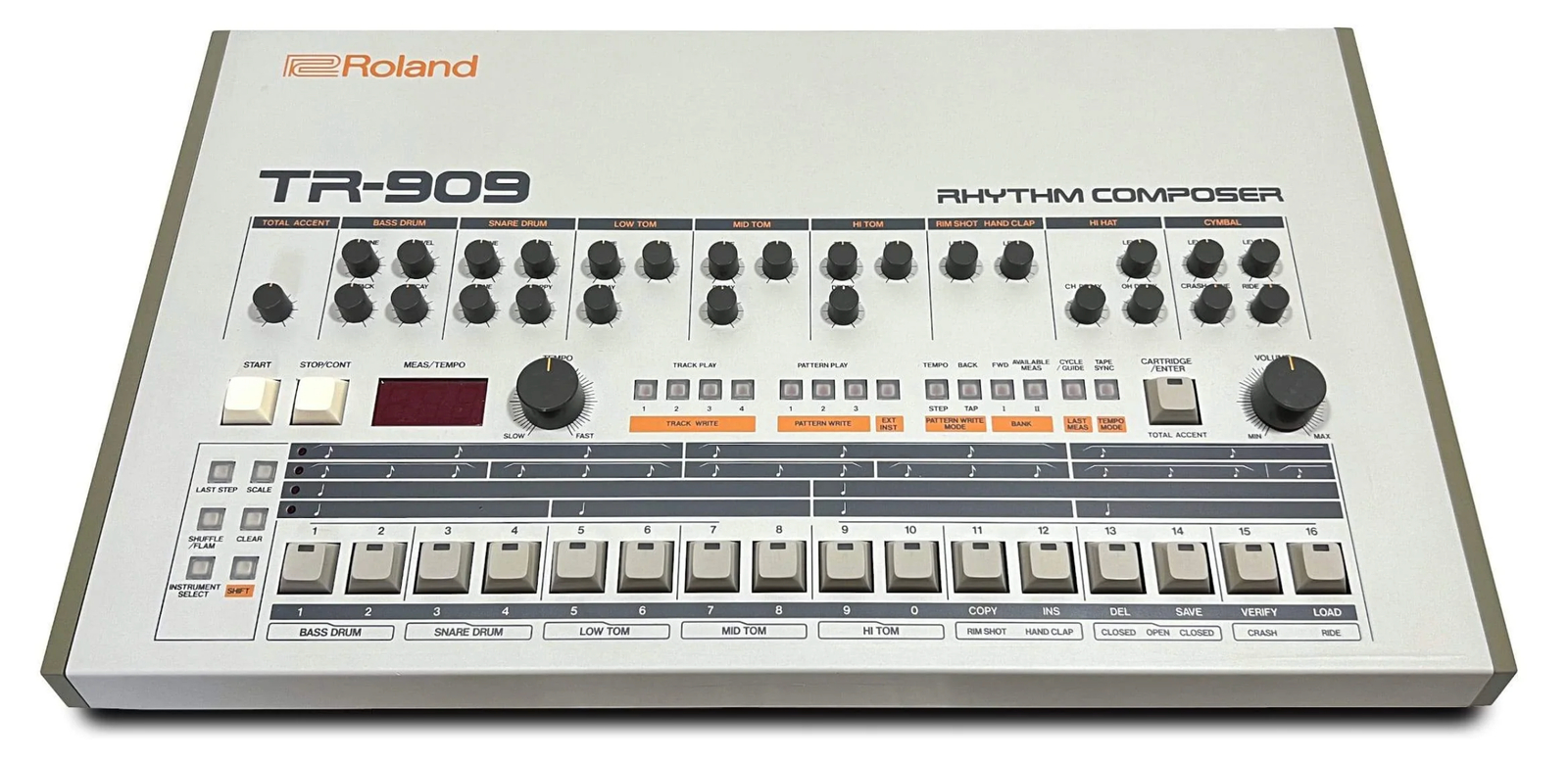
2. Interactive drum voices
Kick — pitch envelope + amplitude envelope
Snare — tone + noise mixed together
Closed hi-hat — metallic oscillators + noise + HPF
Open hi-hat — similar source, longer envelope
3. Kick: why the pitch envelope matters
Without pitch sweep
A low sine wave with a short amplitude envelope sounds more like a simple tone or “boop”.
With rapid downward pitch sweep
The oscillator starts higher and falls rapidly toward its body frequency. That transient pitch movement helps create the characteristic kick impact.
So again, an envelope is simply a control signal — here it controls oscillator frequency rather than loudness.
4. Snare: mix simple sources to create complexity
The pitched component gives body; noise contributes the broadband “snap” and texture. The exact balance, filtering and decay strongly affect the result.
5. Hi-hats: source + filtering + envelope
Hi-hat-like timbres benefit from bright, inharmonic/metallic source material. Several oscillators at non-simple frequency relationships create a less conventionally pitched spectrum, then noise and high-pass filtering add brightness.
6. MIDI mapping
These numbers match common General MIDI percussion note assignments, which connects directly back to the MIDI page.
7. What have we actually used?
Nothing fundamentally new has been added. We have simply reconfigured the synthesis tools you already know.