Polyphony: Voices & Voice Allocation
Until now our synthesizer has used one voice. Polyphony means the instrument can manage several independent voices at the same time.
1. Why polyphony complicated synthesizer architecture
A monophonic architecture
One note needs one active voice path.
A polyphonic architecture
voice 2 ├ → mix → output
voice 3 ┘
Independent simultaneous notes require multiple voice paths plus a system for deciding which note goes to which voice.
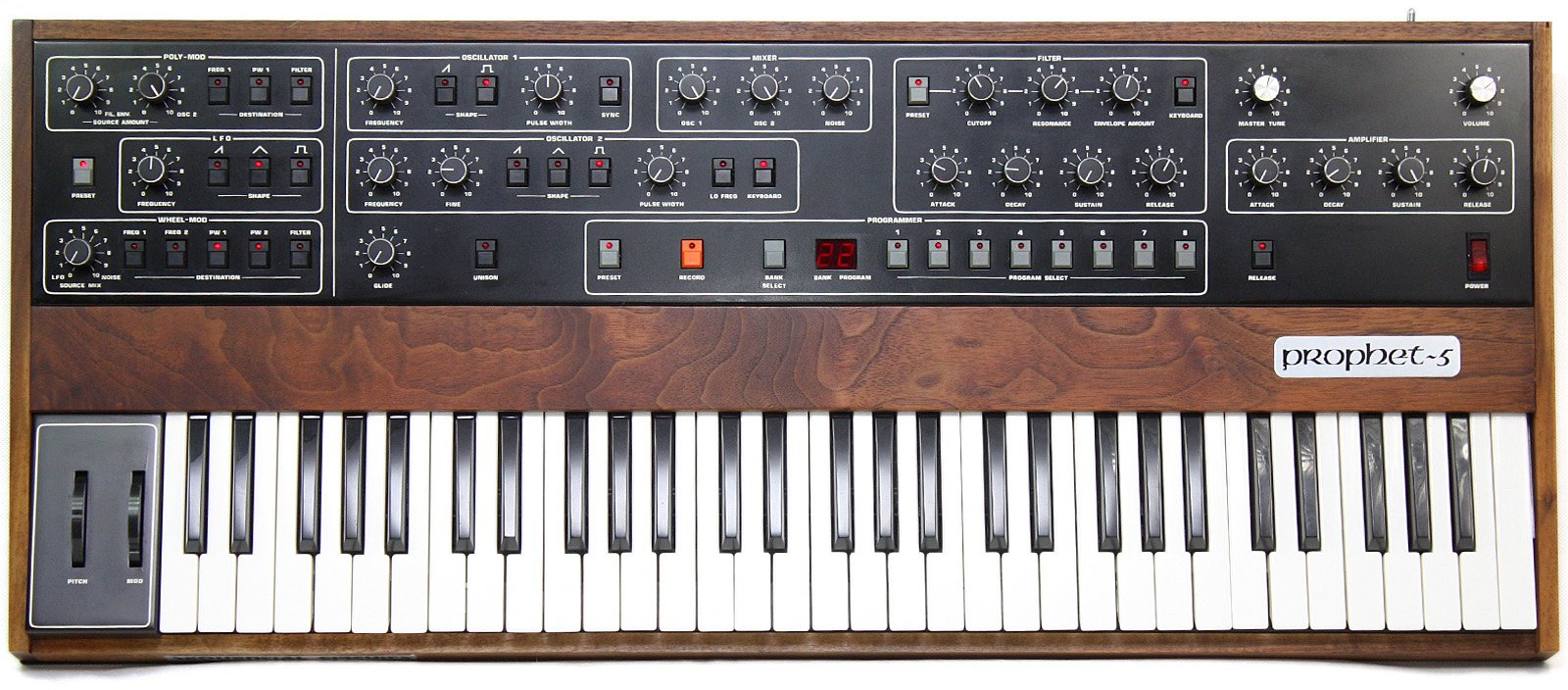
Early analogue polyphony therefore multiplied circuitry, calibration and control problems. A landmark example was the Sequential Circuits Prophet-5 (1978): five programmable polyphonic voices, microprocessor voice control and patch memory.
2. Interactive polyphonic synth
Voice limit
Try a triad with 1, 2 and 3 voices. Then choose 5 voices, hold five notes, and add a sixth.
Simple presets
Keyboard
Computer keys: A W S E D F T G Y H U J K. Unlike the arpeggiator page, simultaneous held keys now request simultaneous voices.
Live voice allocator
Architecture
Illustrative analogue drift
3. Each voice has its own state
With a pad preset, release one key while holding the others. That voice enters its own release stage while the other voices continue independently.
This is why polyphonic implementation is structurally different from our earlier monophonic synth.
4. What happens when we run out of voices?
If every voice is busy and another note arrives, the synthesizer needs a policy. This demonstration uses a simple oldest-voice stealing rule, prioritising released notes before active notes.
The stolen voice will flash in the allocator. Real synthesizers can use different allocation and stealing strategies.
5. Analogue voices were not perfectly identical
Analogue oscillators and other components can vary with temperature, calibration and component tolerances. When several analogue voices are combined, tiny differences between voices can contribute to the character of the instrument — while excessive drift becomes a tuning problem.
6. Synthesis fundamentals complete
Next we can stop thinking of synthesis as a keyboard instrument and use the same building blocks to construct drum-machine sounds: kick, snare and hi-hats.