What Is a Synthesiser Actually Doing?
We have all seen and heard synthesisers, drum machines and software instruments with their multitude of knobs, sliders, switches and controls. Modern software synthesisers can appear incredibly complicated. But what is actually going on underneath all of this?
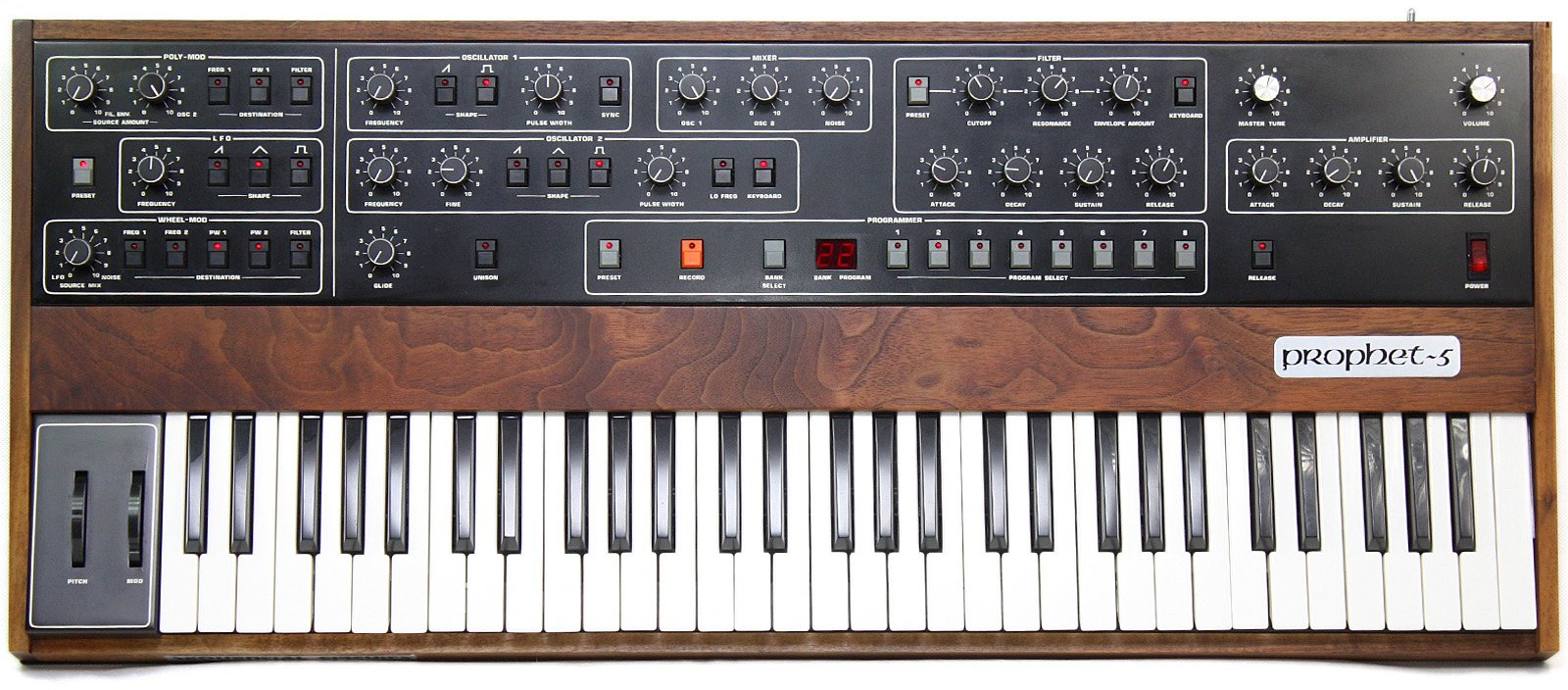
Beneath the complexity
At the most fundamental level, the ideas are surprisingly simple.
We need to create a signal, give that signal a particular spectral character or timbre, shape how it changes through time, and then control or modify it.
the signal
the timbre
through time
modify it
From these relatively simple building blocks we can create familiar synthetic basses, pads, leads and percussion; attempt to reproduce some of the characteristics of acoustic instruments; or create strange and wonderful sounds that could never exist acoustically at all.
A brief note on Shannon and communication theory
Claude Shannon is a name that appears frequently in deeper theoretical discussions of signals, information and digital communication. His communication model provides a useful and surprisingly simple way to think about complex systems.
creates information
creates / encodes a signal
carries the signal
reconstructs / interprets it
where the information arrives
may affect the signal in the channel
We do not need the deeper mathematics here. The framework simply gives us a useful language for thinking about how signals are created, transformed, transmitted and received. These ideas recur throughout synthesis, recording, mixing, digital audio and sound reproduction.
Building from the fundamentals
In the following demonstrations we will break synthesis down into its basic building blocks. We begin with one of the simplest signals — the sine wave — and explore how common waveforms and noise can be generated and understood.
From there we can examine the major approaches to building timbre, including additive, subtractive and FM synthesis. We can then shape those sounds through time using envelopes, alter their frequency content using filters, and finally combine these components into a playable synthesiser voice.
It is to understand what the fundamental components are doing, so that unfamiliar synthesisers become much easier to understand.
What about the maths?
There are mathematical ideas behind all of this, and occasionally we will use them. The mathematics is not the objective. Mathematics gives us a language with which to describe these processes precisely and, importantly, to reproduce them electronically or in code.
For example, we do not need to derive Fourier's mathematics from first principles to understand the extraordinarily useful idea that a complex periodic waveform can be represented using simpler sinusoidal components.
Likewise, when we encounter ideas such as phase, harmonics, Nyquist frequency or an ADSR envelope, the aim is first to understand what they mean for the signal and what we can hear. The notation simply gives us a precise way of describing what is happening.
Why this matters
The software instruments inside Logic, Ableton and other DAWs, hardware synthesisers, plug-ins, drum machines, games, phones and countless digital systems ultimately rely on combinations and extensions of these same fundamental ideas.
Once we understand the building blocks, the apparently huge collection of controls on a synthesiser begins to make sense: oscillators create signals, filters shape spectra, envelopes describe change through time, and modulation allows one process to control another.
Later we can add more sophisticated techniques, but the foundations remain useful throughout.
“What do all these knobs do?”
we will start at the other end:
How do we make a sound in the first place?